
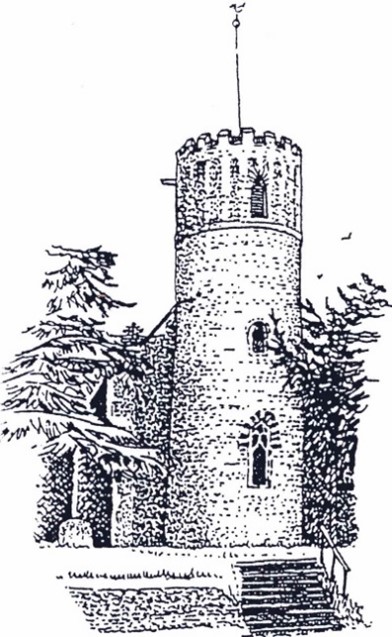
In 2003 Geldeston still had a shop & post office; once it had a primary school and a railway station. “It’s easy to assume” writes our Rector David Smith, “our local churches will always be with us. Yet we know all too well that our pubs, schools, shops and post offices can close and disappear, while precious open spaces are built over.”
In a frank and timely account Revd Smith describes the need for volunteers and funds if our churches (St Michael’s, Geldeston, in particular) are to stay open, to thrive, and to remain an active part of the local community.
***
Help keep Our Churches open
Reverend David Smith
It’s wrong to think the churches where we were baptised, married or buried, will always remain open — for regular Sunday services as well as for Easter, Harvest Festival, Remembrance Day, and Christmas. For some years the continued existence of our parish churches and their ability to stay open has been in doubt.
To remain open, our churches (like businesses, clubs and village halls) require lots of love, financial stability, and the regular contributions of willing and capable volunteers. Lose one of those three and the continued existence of our parish church is at risk.
1. The “Parish Share” or the cost of ministry
Our new group of churches, the Waveney Marshlands benefice, was created because neither the Waveney Group (of which Geldeston formed a part) nor the Raveningham Group could provide the so-called Parish Share, the cost of ministry (paying for a priest of their own). Each year head office, the Diocese of Norwich, calls on us to pay what it costs to support a full-time priest, as well as other needs, such as housing, funding of Diocesan offices and central support.
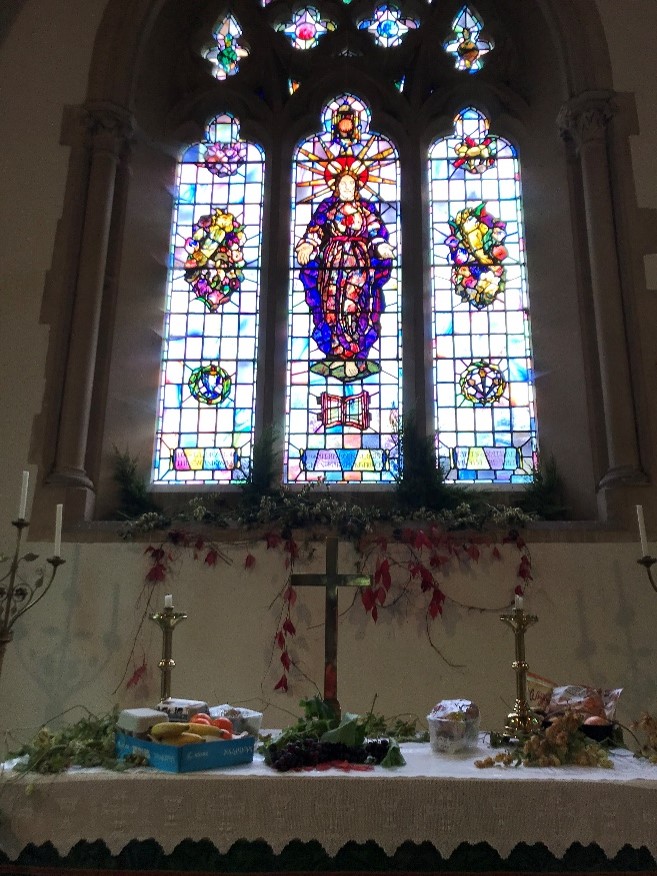
Geldeston church, East window
Instead of money coming DOWN to us from central Church funds, each year we have to transfer a large sum of money UPWARDS to the Diocese, to our head office in Norwich. The new Waveney Marshlands Benefice, for instance, is asked to pay more than £80,000 as its “Parish Share”. The former Waveney and Raveningham Groups could not raise enough to support a priest of their own or cover the costs of central support. After their merger, however, the 14 parishes of the new Waveney Marshlands Benefice were still unable to find this kind of sum.
We’re chronically short of volunteers to help with regular support or the running of our parishes. Each church should have a small governing body, the Parochial Church Council or PCC which meets about four times a year, working with me as its Rector, and takes decisions about the management, mission and ministry of the local church. Two of our 14 parishes (Wheatacre and Thurlton) lack sufficient volunteers to have their own PCC. Others have a group of volunteers as its PCC members that is low and diminishing in numbers.
As a result, many of our churches cannot keep going. The problem is not new. It has been developing over a number of years and affects rural communities up and down the country.
2. But aren’t our churches rich?
People often assume that the Church of England is wealthy; consequently, our churches do not need extra money to survive.
“The Church is indeed asset-rich, owning land and investments that pay for pensions and other costs, but that wealth does not come down to our local churches, nor is it used to pay for local priests. The parish churches must themselves find these funds each year; yet for some time now they’ve been unable to do so.
3. What expenses must our churches pay?
The Parish Share is not the only regular cost we must meet.
Our historic buildings need to be insured (about £1,500 each year); essential repairs must be made; and the church needs to be heated and lit. Then there are the costs of routine maintenance: cutting the churchyard can cost as much as £300 each year, a price beyond the budget of many churches. There are the candles and other items needed to perform services on Sunday or conduct baptisms, weddings and funerals.

Many of our churches no longer have the funds to support themselves or ensure that a parish priest is available. My own presence in the Waveney Marshlands Benefice is largely thanks to other benefices which pay more than their Parish Share in order to subsidise priests like myself. That form of subsidy, however, will soon come to an end.
4. Where does the local church get its income today?
Much of our local churches’ income comes from the regular donations of those who attend church. There is also income from the Church of England fees (established by law) which are paid for weddings, funerals and burials – as well as the donations people may wish to leave after such services. This rarely covers the expense on essentials: insurance, heat and light. And the income from fees rises and falls dramatically depending on how many weddings and funerals take place each year.
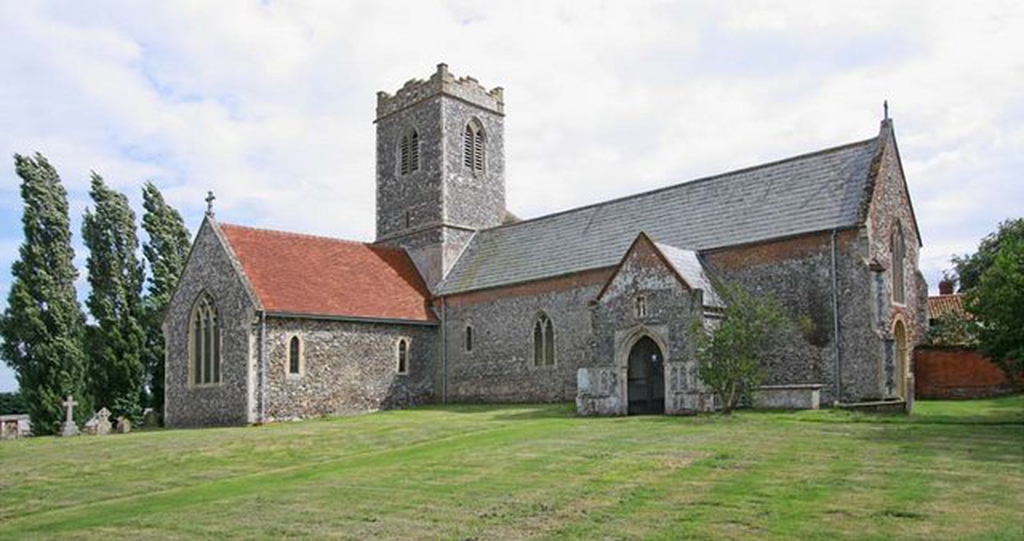
St. Mary’s Church, Aldeby
Our churches have always done their best at fund-raising. Certainly, this helps but as the size and age of the regular congregation changes there are fewer people to help with such events and this, in turn, affects our ability to boost our income in this fashion.
5. How short do we fall of our Parish Share?
In 2019, we were asked to provide a total of £68,789. Our 14 parishes combined could only afford to pay £26,979 or 39.2% of what they were asked. In 2020, the Parish Share for the Waveney Marshlands benefice was set at £67,648. That year we were able to pay £19,378, or 28.6% of what the Diocese requested. In other words, the shortfalls ranged between 61 and 72%.
With careful management, a huge collective endeavour, and by dipping significantly into our reserves, the new benefice was able to pay £50,000 in 2021. Never again shall we raise such a sum; our future levels of payment will be on a par with 2019 at best. On current trends our contribution towards our collective Parish Share will thereafter decrease.
6. Will our churches close? Can we keep our parish priest?
The Church of England is keen that local ministry is maintained as far as possible – but also that it is paid for. Because of significant deficits in its budget, due to reduced Parish Share payments from around Norfolk, the Diocese of Norwich has been reducing the number of priests; those who move on or retire are not being replaced. As a result, the priests who remain are being spread ever more thinly over a larger group of parishes.
Consequently, a priest cannot get round all his or her churches and parishes as regularly as before. The number of church services or pastoral care visits decreases, despite the best efforts of our priests. As a result, the model of ministry has moved some distance from the old “one parish, one priest” model.
*
“I was consecrated priest to the Waveney Group and Raveningham Group of churches in September 2018 and was appointed incumbent of the new Waveney Marshlands benefice when it came into existence in 2020.
Our churches should remain open to serve their local communities, but they must achieve annual income levels that make that possible. At present, the funds they raise barely cover regular expenses and the effort is a great burden on an ageing and diminishing congregation. Without an active team of volunteers, and a Church Council (PCC) to take and implement decisions, the risk of closure is never far away.
I am totally committed as your parish priest. I shall do everything I can to provide the support, care, attention and prayer that you need. The allowance (stipend) the Church pays me and my family, let me assure you, is much less than the Parish Share. My ability to continue playing the role of parish priest to all 14 churches of the Waveney Marshlands benefice depends on our local churches maximising their payment of the Parish Share.
7. How can our churches survive? How can I help?
There’s a great deal of love out there, but we lack enough volunteers to help us and we’re short of funds.
Let me suggest some practical ways you can help our churches stay open:
7.1 : Become a regular volunteer
- As member of the local church council, the PCC;
- As church treasurer;
- By doing helpful odd-jobs around the church and the churchyard;
- Support new initiatives in worship and events for children and families;
- Support our worship with music: play the organ, or other musical instruments;
- Help to cut our churchyard and its hedges: only with such help will they remain both tidy and a benefit to local wildlife;
- Make sure our churches can be open (and closed) each day, allowing people to enjoy the tranquillity and cultural heritage they offer;
- Become a verger, the person who helps set up the church for Sunday worship and for baptisms, weddings and funerals.
7.2 : Make a monthly donation to your local church
7.3 : Become a fund-raiser
Help organise and run social events; help to draw up and submit applications for grants to support our churches.
This may seem a big ask today when our household finances are under pressure and our personal energy levels may be low, but your local community and your priest would welcome whatever contribution you can make.
*
“Thank you for taking the time to read these seven notes,” the Rector concludes.
“And thank you for your support just as we seek always to support you and your communities, prayerfully and faithfully, in the love and manner of Jesus.”
Reverend David Smith
Priest of the Waveney Marshlands benefice
The Rectory, 57 The Street, Geldeston
(First pubished in the November 2022 issue of Tidings.)
 A Geldeston Miscellany